If your child knows the alphabet but struggles to read words, you’re not alone. Many parents face this challenge because children are not taught how sounds actually work in reading. That’s where phonics training for beginners step by step becomes essential.
Phonics is the foundation of reading—it helps children connect letters to sounds and blend them into words. But without a structured plan, teaching phonics can feel confusing and overwhelming.
In this guide, you’ll learn:
- A step-by-step phonics training plan for beginners
- Proven phonics teaching methods for beginners
- Easy activities and strategies you can use at home
- How to choose the best online phonics classes for beginners in India
How to Start Phonics Training for Beginners Step by Step at Home?
A beginner phonics course online or offline is a structured program that teaches children how to:
- Recognize letter sounds
- Blend sounds into words
- Decode unfamiliar words
- Improve reading fluency
Unlike rote learning, a phonics learning program for beginners focuses on understanding sounds, not memorizing words.
Structured phonics training for beginners
Children who follow a structured phonics course for kids beginners:
- Learn to read faster
- Gain confidence in speaking
- Improve spelling naturally
- Develop strong comprehension skills
Research shows that phonics-based learning is one of the most effective ways to build reading skills in early learners.
Step-by-step phonics course for beginners
Here’s a simple and effective phonics training for beginners step by step:
Step 1: Teach Phonics Sounds for Beginners
Start with basic sounds (not letter names).
Examples:
- A → /a/ (apple)
- B → /b/ (bat)
- C → /k/ (cat)
Tips:
- Use flashcards or visual aids
- Repeat sounds daily
- Keep sessions short and fun
Step 2: Introduce Blending
Blending is the key to reading.
Example:
- C + A + T = CAT
This is called phonics blending practice for beginners
Activities:
- Say sounds slowly → ask child to guess the word
- Use 3-letter words (CVC words)
Step 3: Teach Word Families
Help kids recognize patterns:
- cat, bat, mat, sat
This improves:
- Reading speed
- Word recognition
Step 4: Introduce Sight Words
Some words don’t follow phonics rules:
- the, is, was
Teach these separately using repetition.
Step 5: Practice Reading Sentences
Once your child learns blending:
- Start simple sentences
- Gradually increase difficulty
How to Start Phonics at Home (Practical Guide)
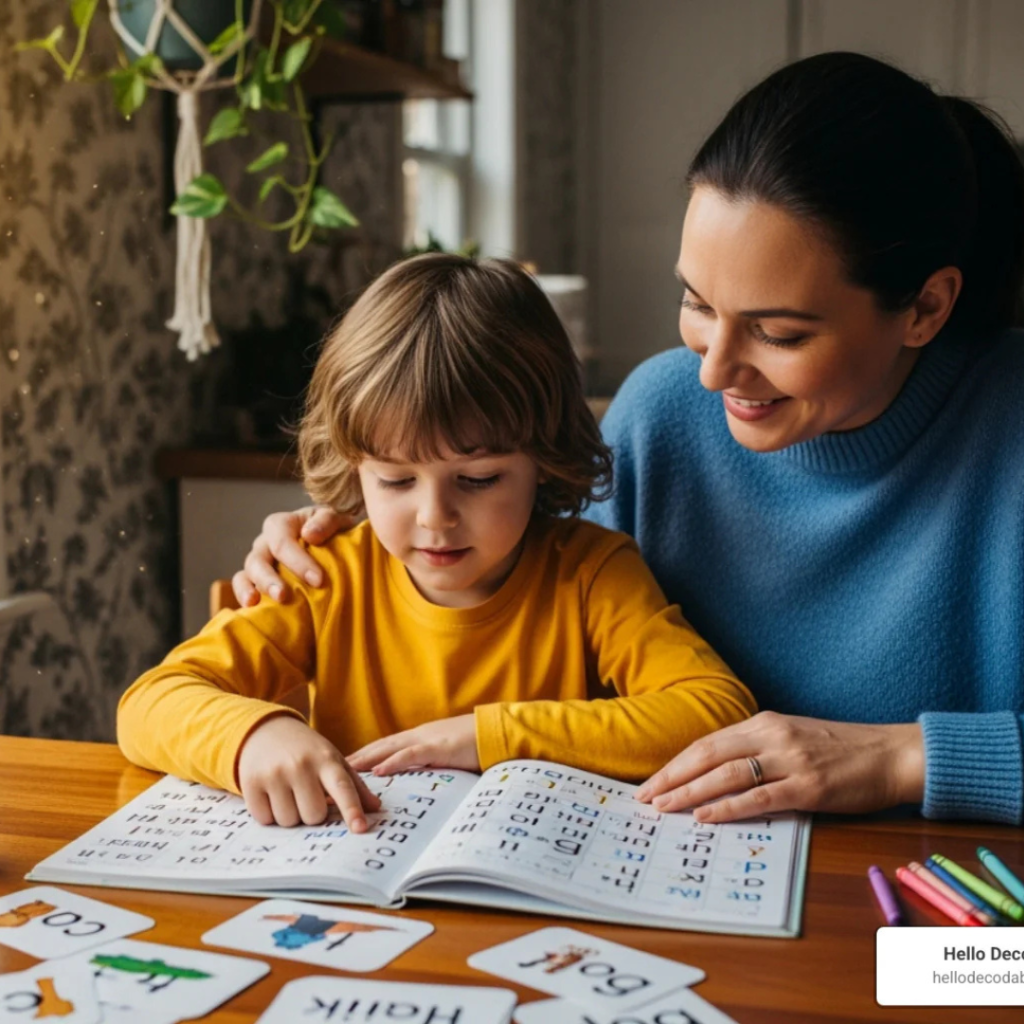
Many parents ask:
“How to teach phonics to beginners step by step at home?”
Here’s a simple routine:
Daily 15–20 Minute Plan
- Revise sounds (5 mins)
- Practice blending (5 mins)
- Read simple words/sentences (5–10 mins)
Fun Phonics Activities for Beginners
Make learning engaging with:
- Alphabet games
- Sound matching games
- Flashcards
- Story-based learning
These phonics activities for beginners improve retention and interest.
Do You Need Phonics Lessons for Beginners PDF?
Many parents search for phonics lessons for beginners PDF, but here’s the truth:
PDFs alone are NOT enough.
Why?
- No guidance or structure
- No feedback for children
- No engagement
✔️ PDFs should be used as practice material, not the main learning tool.
Free Phonics Worksheets & Resources
To make practice easier at home, you can use these trusted websites for phonics worksheets and printables:
| Website Name | Website Link |
|---|---|
| https://www.pinterest.com | |
| Twinkl | https://www.twinkl.com |
| Worksheetfun | https://www.worksheetfun.com |
| K5 Learning | https://www.k5learning.com |
| British Council | https://learnenglishkids.britishcouncil.org |
Phonics Course for Preschoolers vs Older Kids
Preschoolers (3–4 years)
- Focus on sounds and recognition
- Use games and visuals
Kids (5–7 years)
- Blending and reading
- Sentence formation
A good basic phonics course for preschoolers adapts to age and learning level.
Common Mistakes Parents Make
Avoid these while teaching phonics:
❌ Teaching letter names instead of sounds
❌ Skipping blending practice
❌ Rushing into reading
❌ Using only worksheets
✔️ Focus on concept clarity + consistency
How to Choose the Best Phonics Learning Program for Beginners
Before enrolling, check:
✔️ Structured step-by-step curriculum
✔️ Age-specific levels
✔️ Interactive teaching methods
✔️ Practice materials + support
✔️ Qualified trainers
FAQs
How to teach phonics to beginners step by step?
Start with letter sounds, then move to blending, word families, sight words, and finally sentence reading.
What is the best phonics course for beginners?
A structured phonics course for beginners with interactive lessons and guided practice is the most effective.
Can I teach phonics at home?
Yes, using a daily routine, phonics activities, and guided learning methods.
Are phonics lessons PDF enough?
No, they help in practice but cannot replace structured teaching.
What age should a child start phonics?
Children can start as early as 3 years with basic sound recognition.
Conclusion
A well-structured phonics training for beginners step by step can completely transform your child’s reading journey.
Instead of guessing words, your child will:
- Decode confidently
- Read fluently
- Enjoy learning
Ready to Help Your Child Start Reading?
At Phonics Shalla, we offer:
- Expert-led phonics classes for beginners in India
- Age-specific programs
- Fun, interactive learning